

 0.00
0.00 From Agricultural Waste to Clinical Grade: The Science of Tree-Free Paper for Pharmacy Packaging
Posted in: Latest News... 25th February 2026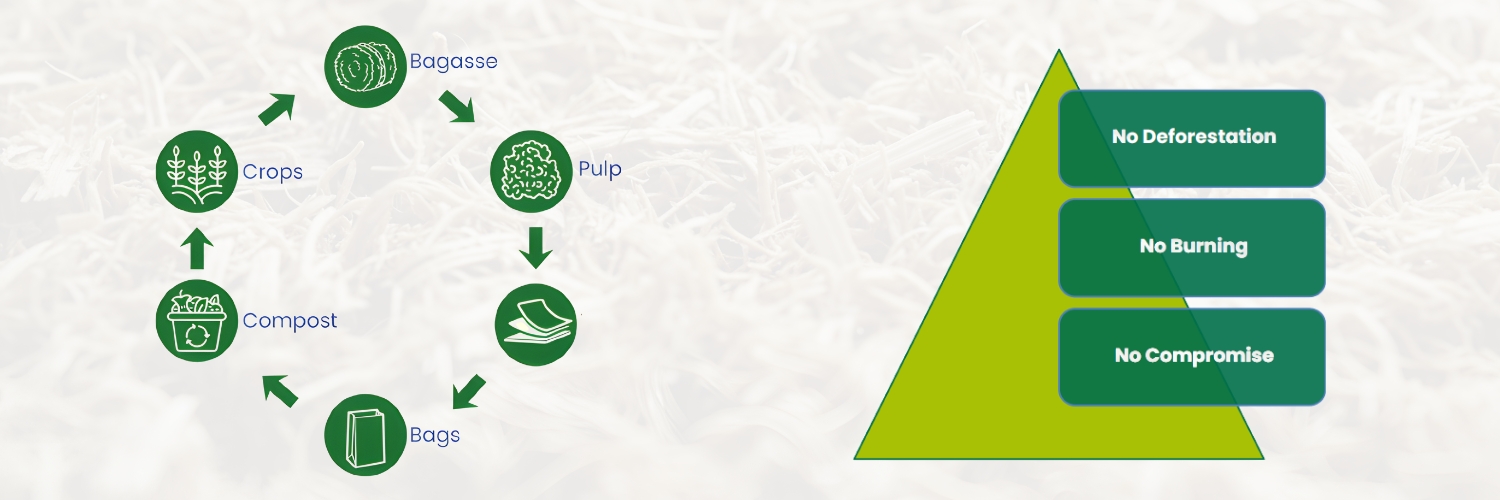
The UK healthcare sector consumes over 1 billion prescription bags annually, the vast majority of which are manufactured from virgin wood pulp. This equates to a staggering consumption of trees, water, and energy.
At Valley Northern, we are committed to being part of the solution. As a company that is constantly exploring ways to improve our carbon footprint and become more eco-friendly, we are proud to share that 30% of our bags are now made from tree-free paper. By transitioning to alternatives like bagasse (sugarcane residue), medical facilities can remove tree harvesting from their supply chains entirely while maintaining the high-performance standards required for patient care.
Solving the UK’s Timber Dilemma
The UK’s reliance on timber is a significant supply chain risk as the UK consumes over 50 million tonnes of timber a year, but only 10% is locally sourced. Consider these facts from recent industry insights:
-
High Demand: The UK consumes over 50 million tonnes of timber every year, with more than half of that dedicated to paper products.
-
Import Dependency: Less than 10% of this timber is sourced domestically, leaving medical providers vulnerable to global market fluctuations and import delays.
-
Waste Generation: Paper and cardboard represent roughly 50% of all packaging waste in the UK.
Tree-free paper offers a localized, resilient solution by repurposing agricultural waste rather than relying on slow-growing, imported forest products.
Turning "Stubble Trouble" into Sterile Solutions
In agricultural hubs like India, the "Crop Waste Crisis" is a major environmental hurdle. Every year, an estimated 100 million tonnes of crop residue are burnt in fields, causing catastrophic air pollution.
Valley Northern is helping turn this "Stubble Trouble" into a clinical-grade resource by switching over at present 30% of our paper bags to Bagasse. By using bagasse—the fibrous byproduct left over after sugarcane is processed for food—we create a truly circular economy:
-
Step 1: Food crops are harvested.
-
Step 2: Waste residue (Bagasse) is converted to pulp.
-
Step 3: High-strength pharmacy bags are manufactured.
-
Step 4: After use, bags are fully recycled or composted, returning nutrients to the soil.
Clinical Integrity: No Compromise on Performance
A common misconception is that "eco-friendly" materials are synonymous with "fragility." For a pharmacist or pharmacy technician, a bag failure isn't just a nuisance—it’s a risk to patient confidentiality and medication safety. To put these concerns to rest, our tree-free paper has undergone rigorous laboratory testing to ensure it meets the demanding standards of the healthcare environment.
The structural integrity of this paper is rooted in its technical specifications. With a high tensile strength of up to 3.6 kg/15mm and a breaking length of <3000 m, these bags are specifically engineered to withstand the weight of heavy glass liquid bottles and bulk prescriptions without risk of tearing. Furthermore, with a Burst Factor minimum of 14 and a Tear Factor of 40-45, the material provides the physical resilience required for the high-volume "grab-and-go" nature of a busy pharmacy.
|
Technical Parameter |
Tree-Free Performance Value |
|
Tensile Strength |
1.7 - 3.6 kg/15mm (Withstands heavy medication/glass) |
|
Breaking Length |
3000 m (Ensures structural integrity) |
|
Brightness |
Min. 82% (Professional, clean aesthetic) |
|
Safety Standards |
Certified Food Safe |
Beyond physical strength, clinical packaging must also meet aesthetic and safety benchmarks. Our tree-free paper maintains a minimum brightness of 82%, providing the clean, professional, and sterile appearance expected in a medical setting. Crucially, the material is certified Food Safe, fully recyclable, and compostable, ensuring that your transition to a circular economy model does not come at the cost of regulatory compliance or patient safety.
Measurable Sustainability for NHS Frameworks
The shift to tree-free paper isn't just about ethics; it’s about meeting NHS Net Zero goals and UK Plastic Packaging Tax objectives. The data shows that bagasse production is significantly leaner than traditional timber harvesting:
-
Carbon Impact: A 40% reduction in greenhouse gas emissions (CO2e) compared to wood-pulp paper.
-
Water Conservation: Uses less than half the water required for conventional kraft production.
-
Zero Deforestation: No dedicated forestry is required, as the raw material is a byproduct of the food industry.
-
Regulatory Alignment: Supports the NHS Evergreen Sustainable Supplier Framework by providing transparent, measurable environmental improvements
By choosing agricultural waste over timber, your pharmacy directly supports the circular economy while ensuring that "Hassle-Free" care extends to the planet.
The Future is Hassle-Free
At Valley Northern, we believe that caring for patients and caring for the planet should go hand-in-hand. By choosing tree-free pharmacy bags, you aren't just buying a consumable—you are investing in a more resilient, sustainable UK healthcare system.
It is a simple switch that requires no compromise on quality, yet delivers a measurable impact on your facility's environmental footprint.
Ready to transition your business to a tree-free future? Contact our team today for a technical consultation to see how our bagasse solutions fit your procurement goals.